Selling your home?
Then begin your journey with a free property valuation
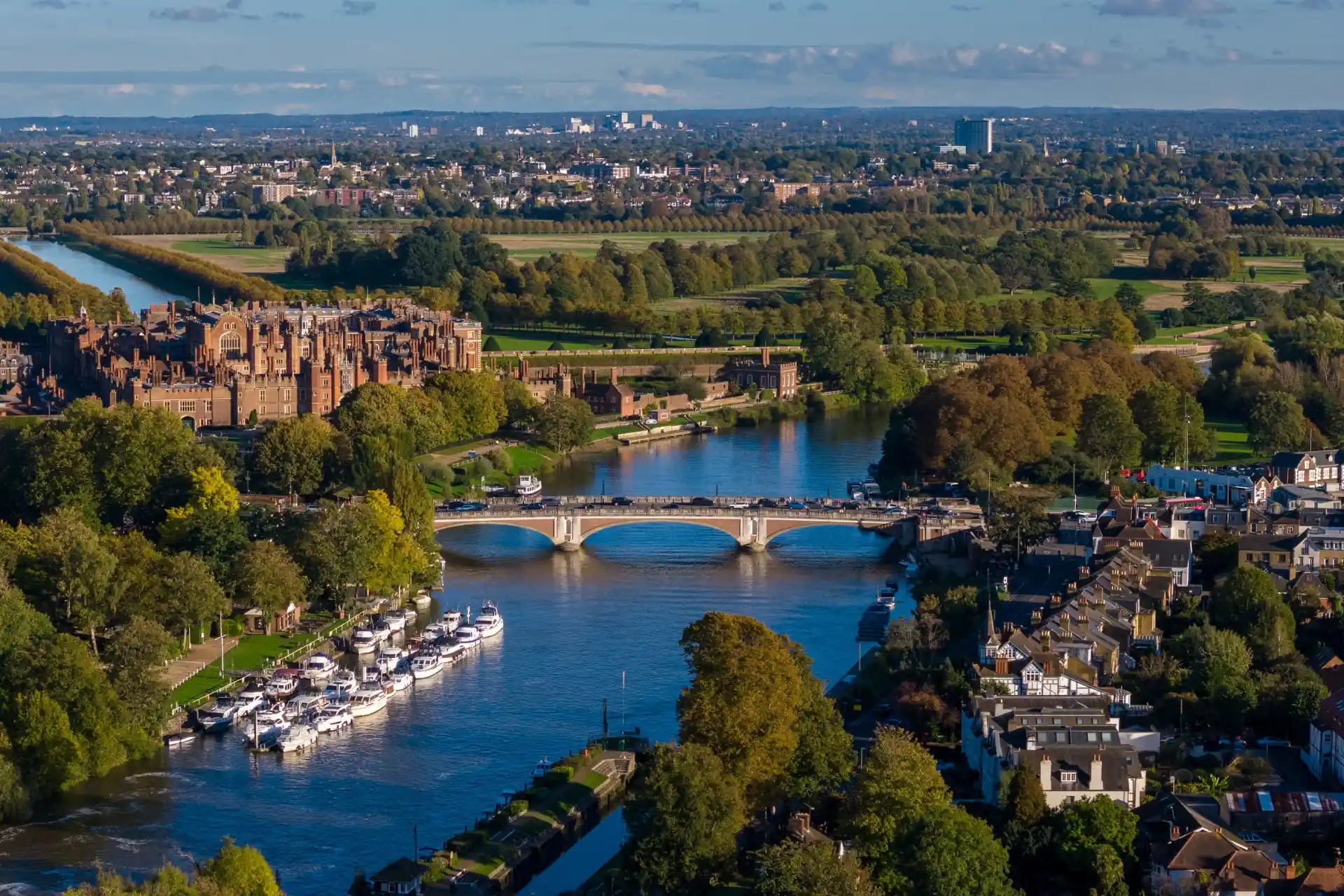
Your home probably isn’t overpriced. But it may be priced for a market that no longer exists. Across Surrey, asking prices have fallen by an average of 2.3% in the past six months, and properties are sitting on the market for around 14 weeks before going under offer. That’s not a crash — but it is a market that punishes wishful thinking. If you’re considering a sale, or you’ve already listed and the phone isn’t ringing, here’s what’s actually happening and what you can do about it.
UK house prices haven’t collapsed. The average home is now worth £272,611, with annual growth of just 1.4% (Land Registry, 2026). Nationwide’s September figures showed annual growth of 0.8%, with prices edging down 0.2% month on month after seasonal adjustment. Rightmove has revised its national price forecast for 2026 to somewhere between 0% and -2%.
The honest characterisation of the current market is that it has lost momentum, not direction. Properties are still selling. Buyers are still out there. But they are moving carefully, and they have more to choose from than at any point in the past decade.
Surrey remains the second most expensive county in England and Wales, with an average price of £617,000. Over the past 12 months, that figure has risen by around £10,100, or 2%. The county recorded 9,602 residential transactions over the same period, with a median sale price of £492,500 — some £208,000 above the UK national median.
Those headline figures look reassuring. Look closer at individual towns, though, and a more varied picture emerges.
| Town | Median Price | Year-on-Year Change |
|---|---|---|
| Weybridge | £650,000 | +4.0% |
| Farnham | £549,975 | +3.8% |
| Dorking | £490,000 | +2.6% |
| Camberley | £475,000 | +2.6% |
| Guildford | £495,000 | +2.1% |
| Redhill | £471,250 | -0.8% |
| Woking | £420,000 | -5.7% |
The variation here matters. A 4% rise in Weybridge and a 5.7% fall in Woking are not two versions of the same market — they are two different markets operating under the same county name. What your neighbour sold for last year, or what Rightmove suggested when you browsed comparable listings, may have little bearing on what a buyer will offer today.
The single biggest factor is borrowing costs. The average two-year fixed-rate mortgage stood at 5.96% in early October 2026, up from 4.83% in late February (Moneyfacts, October 2026). The average five-year fix is sitting at 6.00%. Most analysts do not expect meaningful reductions before the end of the year.
The effect on purchasing power is significant. A buyer with a £1,500 monthly repayment budget over 30 years could borrow around £279,100 at a 5.01% rate. At 5.63%, that same budget supports only £260,400 — roughly £18,700 less (Moneyfacts, 2026). Zoopla’s September House Price Index puts the increase in annual mortgage costs for the average buyer at £1,800 compared to the start of the year. First-time buyer mortgage payments now average around 32% of take-home pay.
Around 1.8 million fixed-rate mortgages will mature in 2026. Many of those households are stress-testing their finances before committing to anything new. That caution is rational, and it is showing up in how long properties are taking to sell.
The other side of the equation is choice. According to TwentyCi, 794,000 properties were newly listed for sale across the UK in the first five months of 2026 — a 2.7% increase on 2025 and the highest figure in their recorded series. In the South East specifically, there are 9% more homes for sale than at the same point last year.
Rightmove reported in September 2026 that the number of properties available for sale had reached a 12-year high for the time of year, while buyer enquiries were 9% lower than a year earlier. That combination — more stock, fewer active buyers — shifts negotiating power firmly towards purchasers.
This isn’t a reason to panic. It is a reason to think carefully about where your property sits relative to everything else a buyer can choose from.
In a market with plentiful supply and cautious buyers, the asking price is doing more work than it did two or three years ago. An overambitious figure doesn’t just mean fewer offers — it means fewer viewings, which means the listing goes stale, which means buyers assume something is wrong with the property.
Across Surrey, sellers have been reducing asking prices by an average of 2.4%. That figure reflects what happens when a property is launched at a price shaped by last year’s market rather than this one. A reduction rarely generates the same interest as a correctly priced launch. It signals hesitation, and buyers notice.
The properties selling well right now share a common characteristic: they are priced accurately from day one, presented well, and marketed to the specific buyer most likely to want them. That sounds straightforward, but it requires an honest assessment of the current market — not the market of 18 months ago.
It does not mean pricing below value to generate a bidding war. It means pricing at a level that a qualified buyer, with a mortgage agreed in principle at today’s rates, can actually reach — and that compares favourably with similar properties currently listed nearby.
A few questions worth asking before you set or revise your asking price:
The gap between asking price and achieved price is widening in parts of Surrey. Knowing that gap exists in your area before you list is far more useful than discovering it three months in.
If your property has been listed for more than eight to ten weeks without a serious offer, it is worth reviewing three things: the price, the presentation, and the marketing. Usually, at least one of those needs attention.
A price reduction is sometimes the right call — but it should be a meaningful one. A 0.5% reduction on a £500,000 property is unlikely to change a buyer’s decision. A more substantive adjustment, combined with refreshed photography or updated listing details, can reset interest levels.
It is also worth considering whether your agent is reaching the right buyers. In a market where enquiries are down 9% nationally, the quality of targeting matters more than volume.
The market is not closed to sellers. Surrey’s fundamentals — good schools, direct rail links into London, relatively spacious housing stock — continue to attract buyers who are serious and financially prepared. But those buyers are doing more homework than their predecessors did in 2021 or 2022. They know what else is available, and they know what comparable properties sold for.
The opportunity for Surrey sellers who price correctly and present well is real. The risk for those who don’t is not that the property won’t sell eventually — it’s that it will sit long enough to lose the buyers who were most likely to pay full value for it.
For a straightforward read on what not to do when you’re speaking to an agent about your sale, this guide for Surrey sellers and landlords is worth a few minutes of your time.
None of this is complicated. But in a market where buyers have the most choice they’ve had in over a decade, the details matter more than they did.
If you’d like an honest assessment of where your property sits in the current Surrey market, the team at Greenfield is straightforward about what we’re seeing locally. Get in touch and we’ll give you a clear picture — no pressure, no inflated estimates.
Then begin your journey with a free property valuation
Contact us, and we will be more than happy to help you


**Is the UK property market running out of steam?** After a record-breaking start to the year, asking prices have fallen sharply, mortga...

## Is Now a Good Time to Sell in Epsom & Ewell? The Epsom and Ewell property market is outperforming the wider South East, with average ...
If you’ve been thinking about selling or letting your property in Ewell, Epsom, Worcester Park or Stoneleigh, you’re not alone. Despite m...



"*" indicates required fields
"*" indicates required fields